High-intensity conditioning is a tool with a sharp edge. Used well, it builds the capacity to express strength under fatigue, repeat efforts, and recover between rounds. Used poorly, it shows up as fried legs, missed lifts, and stalled sport performance. The job is to dose it for the result you want.
For advanced lifters and grapplers, high-intensity conditioning belongs in the program, but at a controlled dose. One to two sessions per week is a workable ceiling for most weeks. Sessions should be short, deliberate, and matched against current sport stress. Repeat-effort and short interval work usually transfer better than long high-intensity efforts.
What High-Intensity Conditioning Actually Means
High-intensity conditioning refers to work intervals taken at intensities above the second ventilatory threshold. The athlete cannot sustain conversation. Heart rate climbs into the upper aerobic and anaerobic zones.
Categories include short intervals (10 to 60 seconds work, full or near-full recovery), classical intervals (1 to 5 minutes work, work-to-rest ratios from 1:1 to 1:3), repeat-effort work (multiple short bursts with managed recovery), and high-intensity continuous work (3 to 10 minutes at threshold).
Each category produces different adaptations and carries different recovery costs.
Why It Matters for Advanced Athletes
For grapplers, repeat-effort capacity is decisive. The capacity to recover between exchanges, between rounds, and across a multi-match day is built through interval and repeat-effort work, not through steady aerobic work alone.
For strength athletes, high-intensity conditioning can improve work capacity and tolerance for repeated hard efforts, but aerobic base work is usually the bigger driver of recovery between heavy sets.
For both, the recovery cost is real and has to be planned for. A poorly placed high-intensity session can erode the next two days of lifting or sport work.
How It Applies to Barbell Strength Training
High-intensity conditioning is most compatible with strength training when:
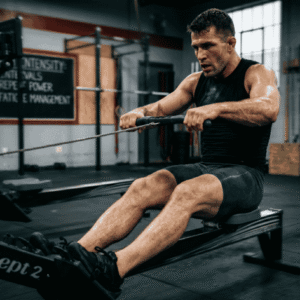
The modality has low eccentric load (bike, row, sled, ski erg, swim).
The session is short and deliberate.
It is placed away from heavy lower-body sessions or with at least 24 hours of separation.
Running intervals are useful for runners but compete more directly with lifting recovery than bike or row intervals.
Sled-based intervals are unusual because they combine high intensity with very low eccentric cost. They tolerate stacking with heavy lifting better than most modalities.
How It Applies to BJJ, Grappling, and Hybrid Athletes
For grapplers, the highest-transfer high-intensity work mirrors the energy demands of the sport. Short intervals with managed recovery (30 to 60 seconds work, 60 to 120 seconds rest) develop the repeat-effort capacity matches require.
Hard sparring itself is high-intensity conditioning. For active competitors, this often covers most of the high-intensity dose. Additional gym-based high-intensity work belongs in lighter sport weeks or off-season blocks.
For hybrid athletes who race, high-intensity intervals should be specific to the race format. Bike intervals for cyclists, run intervals for runners, mixed for general fitness goals.
Practical Programming Rules
Cap High-Intensity Volume
For most advanced athletes managing sport, one to two gym-based high-intensity sessions per week is a workable ceiling. More usually costs more than it returns.
Use Short Intervals for Most Sport Athletes
Work intervals of 10 to 60 seconds with managed recovery transfer better to grappling than long intervals at threshold.
Schedule Away From Heavy Lower-Body Work
A hard interval session in the 24 hours before a heavy squat or pull usually compromises one or both. Separate by 36 to 48 hours when possible.
Use Sled and Bike for Strength-Compatible Intensity
Sled pushes and bike intervals tolerate stacking with lifting better than running or jumping intervals.
Count Sparring and Sport Toward Total High-Intensity Volume
Hard rolling is high-intensity work. The total weekly high-intensity exposure includes sparring rounds, competition simulation, and any gym intervals stacked on top.
Recover Before Repeating
A useful default is at least 48 hours between hard interval sessions, and at least 72 hours from a hard session to a competition simulation.
Example Programming Templates
Template 1: Off-Season High-Intensity Day for a Grappler
Training focus: Repeat-effort capacity for grappling.
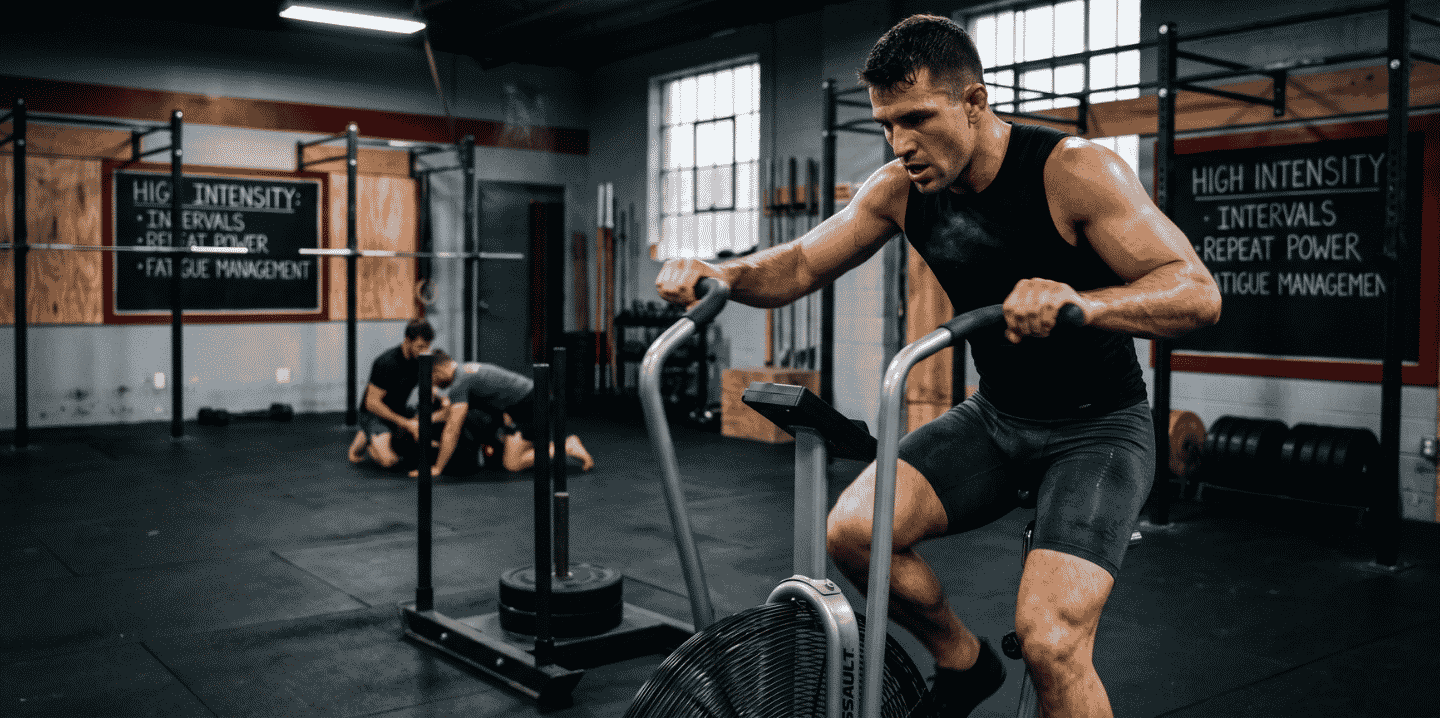
Main work: Assault bike. 10 rounds of 30 seconds hard, 90 seconds easy. Final 2 rounds at strong but not maximal effort.
Stress level: High. Heart rate climbs across rounds. Recovery between rounds shortens as fatigue accumulates.
Programming response: If average power, speed, or round quality drops by roughly 15 to 20 percent on the final rounds, cap the session at 8 rounds next time. If output holds and recovery is good, add a round next cycle.
Coaching note: This is a sport-transfer session. It is not a max-effort session. Stop before output collapses.
Template 2: In-Season High-Intensity for a Strength-Biased Hybrid Athlete
Training focus: Maintain conditioning without compromising lifting.
Main work: Sled push intervals. 6 rounds of 20 to 30 yards heavy push, walk back recovery. Total session under 20 minutes.
Stress level: Moderate to high locally, with lower eccentric cost than running or jumping intervals.
Programming response: If the athlete is preparing for a heavy lower-body day within 24 hours, drop to 4 rounds or substitute bike intervals. If sport sparring is hard the same week, keep at 4 rounds.
Coaching note: Sled work is a forgiving high-intensity tool for many strength athletes because it reduces eccentric stress compared with running intervals.
Common Mistakes
Treating every high-intensity session as a maximum effort session. Output should be hard but repeatable across rounds.
Stacking high-intensity conditioning the day before a heavy lift. The lift usually pays the cost.
Using running intervals as the default modality for a lifter. Bike, row, sled, or ski erg usually cost less and transfer well enough.
Ignoring hard sparring as conditioning. A grappler who rolls hard four times a week is already absorbing significant high-intensity work.
Adding intervals without removing other stress. The week has a fixed capacity. New work has to displace old work or recovery suffers.
Coach or Clinician Review Triggers
Refer for review when:
Persistent chest pain, lightheadedness, or unusual shortness of breath appears during or after intervals.
Heart rate fails to recover to expected ranges within several minutes of work cessation across multiple sessions.
Joint irritation in knees, hips, or ankles becomes localized and consistent rather than diffuse and short-lived.
Sleep, mood, or appetite degrade across a high-intensity block. These are systemic signals that the dose has exceeded recovery.
How This Applies to Adaptive Programming
If sport sparring volume is high this week, then drop gym-based high-intensity to one short session or remove it entirely.
If the athlete completed a hard sport session within 24 hours, then high-intensity gym work is usually not appropriate that day.
If output drops more than 20 percent across rounds within a session, then end the session early. The training stimulus has been met.
If a competition is within 14 days, then taper high-intensity volume and preserve only short, sharp exposures.
If recovery markers (sleep, resting heart rate, perceived energy) trend in the wrong direction across two weeks, then cut high-intensity volume by half before adjusting anything else.
Frequently Asked Questions
How often should advanced athletes do high-intensity conditioning?
Most athletes managing sport and strength training do well with one to two gym-based high-intensity sessions per week. Add sport sparring and the total weekly high-intensity exposure is often already at ceiling.
Is high-intensity interval training better than steady-state for grapplers?
Both serve a purpose. Steady-state Zone 2 builds the aerobic base that supports repeat efforts. High-intensity intervals develop the repeat-effort capacity itself. Neither replaces the other.
Can high-intensity conditioning replace strength training for athletes who are short on time?
No. They develop different qualities. High-intensity conditioning improves work capacity and repeat-effort tolerance. Strength training builds force production, muscle, and tissue capacity. Replacing one with the other leaves a gap.
How long should a high-intensity session be?
Most useful sessions are 15 to 30 minutes including warm-up. The work portion is often 8 to 20 minutes of accumulated hard work. Longer sessions usually mean the intensity was not high enough.
If you are stacking sport, strength, and conditioning, the question is rarely whether to add more high-intensity work. It is usually whether the current dose is being absorbed. Audit total weekly hard exposures across sport and gym before adding another session.