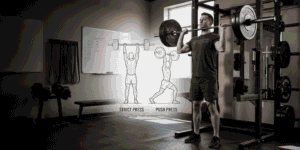

A deadlift specialization block is a defined period, usually four to eight weeks, where the deadlift gets first priority in fatigue allocation, exercise selection, and recovery planning. Everything else in the program is built to support it, or trimmed so it does not interfere.
Specialization is not a default mode. It is a choice with a cost. The cost is squat and bench progress slow or maintain, and total training stress on the posterior chain is elevated. The benefit is real technical and strength improvement on the pull.
When to Specialize on the Deadlift
Specialize when several of the following are true:
-
The deadlift is the lift with the largest gap between current and goal.
-
The deadlift has stalled while squat and bench have continued to progress.
-
A meet, test, or assessment is far enough out to absorb a focused block plus a normal peak.
-
The athlete has the recovery bandwidth, sleep, and life stress profile to absorb heavier weekly posterior chain load.
-
Technical issues at heavy loads are stable enough that more heavy exposure will help, rather than reinforcing a broken pattern.
If technique breaks down above 85 percent in a repeatable way, a specialization block built around heavy pulling will likely entrench the problem. Build around the pull first.
When to Build Around the Pull
Build around the pull, meaning keep deadlift volume modest and improve the surrounding system, when:
-
The technical limiter is unresolved at heavy loads.
-
The lower back, hips, or grip cannot currently tolerate higher hinge volume.
-
Squat is also a priority lift and is progressing.
-
The meet or test window is short enough that a true specialization block cannot fit before peaking.
-
Recovery is compromised by life stress, sleep loss, or competing sport demands.
Building around the pull usually means one moderate deadlift session per week, two to three days of focused posterior chain accessory work, and aggressive attention to brace, lat tension, and hip position on supplemental movements.
Block Architecture for a Deadlift Specialization
A practical four to six week structure:
Week 1 and 2: Re-entry and Position
-
One heavier pull day, focused on technique under load, top sets at RPE 7 to 8.
-
One supplemental hinge day, usually a paused or tempo variation at moderate load.
-
Posterior chain accessories twice per week.
Week 3 and 4: Load
-
Heavier pull day, top sets at RPE 8 to 9.
-
Supplemental hinge day, slightly heavier than weeks 1 and 2 but still position-priority.
-
Squat held at maintenance, usually one squat day with lower volume than baseline.
Week 5: Load Test or Overreach
-
One heavy single at RPE 9, used as a checkpoint.
-
Lower supplemental hinge volume that week.
-
Optional second hinge exposure at moderate load if recovery allows.
Week 6: Deload or Transition
-
Reduce hinge volume by roughly half, keep one moderate exposure, and reassess.
This is a template, not a prescription. The coach adjusts based on the readiness signals discussed below.
Fatigue Triggers Inside a Block
Pull the brakes when:
-
Bar speed on planned top sets drops two RPE points week over week at the same load.
-
Sleep drops below the athlete’s usual floor for more than two nights in the same week.
-
Grip endurance collapses on supplemental work that was previously easy.
-
Morning posterior chain stiffness persists past warm-up two sessions in a row.
Pulling the brakes usually means cutting one supplemental hinge exposure, not the main heavy session, unless the main heavy session is the source.
Current-to-Goal Gap Thinking
Before choosing a specialization block, the coach maps:
-
Current numbers and recent training maxes on all three lifts.
-
The goal pull, the time window, and the planned peak.
-
Available recovery bandwidth, including any sport demands.
-
Pain constraints that limit hinge tolerance.
-
Technical limiter and whether more heavy exposure will help or hurt that limiter.
Specialization is justified when the gap is large, the timeline is long enough, recovery is available, pain is not actively limiting, and the technical limiter is stable.
Application to BJJ and Hybrid Athletes
Most grapplers should rarely run a full deadlift specialization block during a competitive training cycle. The fatigue cost competes directly with mat performance.
Better routing:
-
Off-season or post-competition windows are the place for a true specialization block.
-
In-season, the focus is maintenance: one moderate pull day, posterior chain accessories, and grip work that does not double-tax the forearms.
-
If a grappler insists on improving the pull during in-season training, accept that mat intensity must drop during the block.
Substitutions Inside a Specialization Block
-
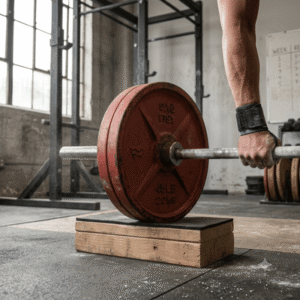
If conventional starts to break down, route the main session to trap bar or block pulls for two weeks while keeping supplemental volume on a competition-style hinge at lighter loads.
-
If grip is the limiter, use straps on supplemental work and protect hook grip exposure for top sets.
-
If lumbar tolerance drops mid-block, reduce range with elevated pulls for a week, hold position-focused supplemental work, and review before reloading.
Coach and Clinician Review Triggers
Pause and review when:
-
A new sharp symptom appears mid-block.
-
Top-set performance regresses two weeks running with no clear stressor.
-
Pain at end of range becomes pain inside working range.
Conservative routing: pause heavy hinge work, hold supplemental at low intensity, and route to a clinician if symptoms persist.