
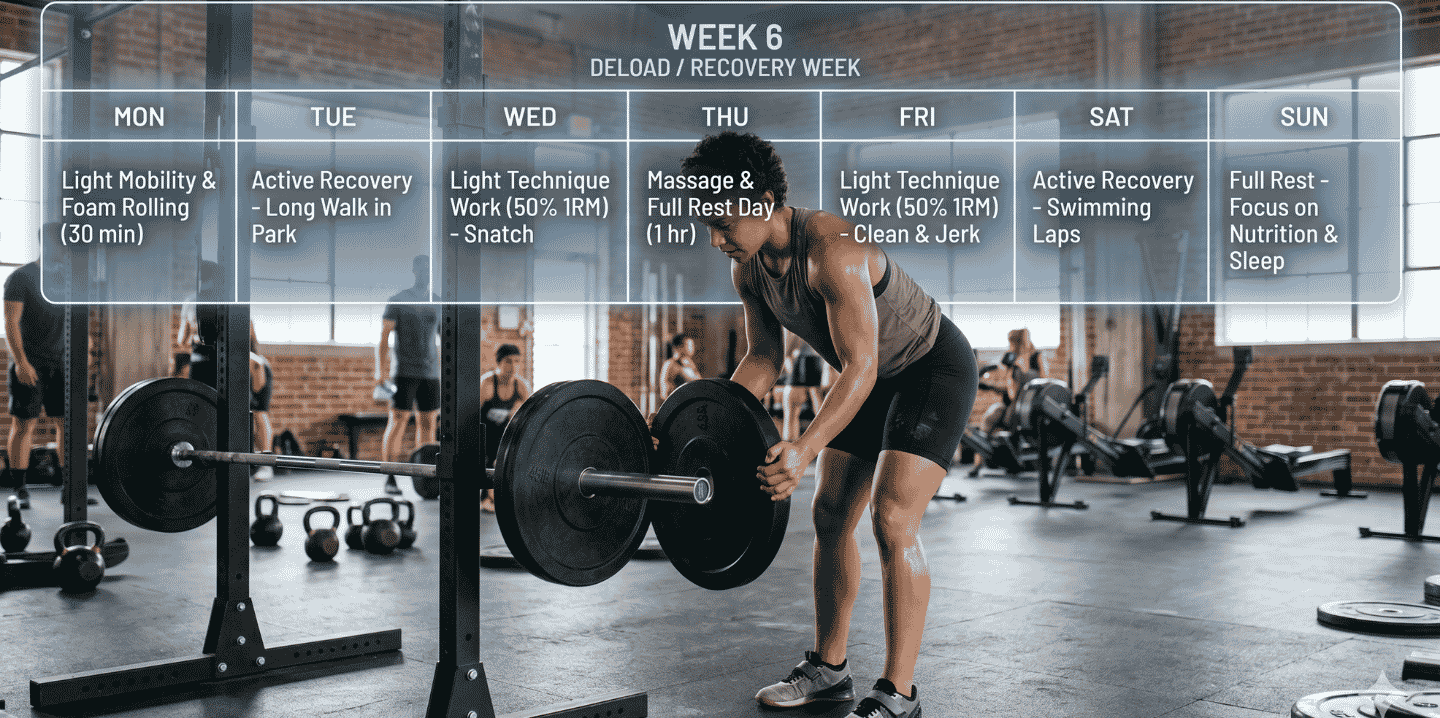
Hard training creates the stimulus, but adaptation depends on recovery. For advanced athletes, the problem is not a lack of effort. The problem is often that high effort is repeated for too long without enough reduction in stress to reveal the fitness that has already been built.
A deload is not a lazy week. It is a planned reduction in training stress that allows fatigue to fall while the athlete keeps the important movement patterns active. Done well, a deload preserves strength expression, restores readiness, and prepares the next block to be productive.
A deload is a planned reduction in training volume, intensity, or both. The goal is to reduce accumulated fatigue while maintaining technical exposure to important lifts. Most advanced athletes benefit from deloads every four to six weeks, but timing should be adjusted based on sport load, readiness, performance trends, soreness, sleep, and movement quality.
What Deload Programming Actually Means
Progressive overload creates fatigue. That fatigue is not automatically bad. Short periods of functional overreaching can be useful when they are followed by enough recovery to allow performance to rebound.
The problem begins when the athlete continues adding stress after performance quality has already started to decline. Bar speed slows, RIR targets become inaccurate, soreness lingers, sleep quality drops, and sport performance starts to feel flat. At that point, more hard work may only deepen the fatigue.
A deload deliberately reduces the training dose. It keeps the athlete practicing key movement patterns, but with less total work and usually slightly lower loading or more conservative RIR targets.

Why Deloads Matter for Advanced Athletes
Advanced athletes lift heavier absolute loads, create more systemic fatigue, and often have more external stress from sport practice, competition preparation, work, or weight management.
Because the loads are heavier, the cost of a poorly timed hard week is higher. An advanced lifter can accumulate enough fatigue from a few heavy sessions to suppress performance for multiple days. A grappler can add hard rolling, grip fatigue, and lower-back stress on top of that.
Deloads act as a pressure-release valve. They prevent the athlete from needing a full crash before recovery is respected.
How Deloads Apply to Barbell Strength Training
In strength programming, deloads are usually managed by reducing volume first. This means fewer hard working sets, fewer total exposures, and less accessory work.
Load can be reduced as well, but it usually does not need to disappear. Many advanced athletes feel better when they continue touching moderate-to-heavy weights for fewer sets and with more reps in reserve. This keeps the nervous system and movement pattern familiar without creating the same fatigue cost as a normal training week.
For example, a deadlift session that was 4 sets of 5 at RIR 1 to 2 may become 2 sets of 5 at RIR 3 to 4 with a modest load reduction. The lift still feels like a strength movement, but the total stress is much lower.
How Deloads Apply to BJJ, Grappling, and Hybrid Athletes
BJJ athletes need deloads to account for both the weight room and the mat. A deload in the gym does not help much if the athlete doubles hard sparring, adds sprint intervals, and cuts calories at the same time.
For grapplers, a weight-room deload can be scheduled during a high-stress sport week, such as a peak camp week or a week with multiple hard sparring sessions. The goal is to preserve key strength exposures while freeing recovery resources for the sport.
If joint tolerance is low, the deload may also include temporary exercise substitutions. Heavy bilateral pulls may become elevated pulls, sled work, belt squats, or split squat variations. Pressing may shift to dumbbells, landmine work, or push-ups on handles.
Practical Programming Rules
Reduce Volume First
Volume is usually the first lever to pull. Cutting total working sets by 30% to 50% is a strong default. If the athlete normally performs 4 sets of 5, a deload may use 2 sets of 5.
This removes a large amount of fatigue while keeping the movement familiar.
Reduce Load Modestly
Load reductions do not need to be dramatic. A 5% to 15% reduction is often enough when volume is also reduced. If the athlete is highly fatigued, injured, cutting weight, or in a hard sport week, a larger reduction may be appropriate.
The load should move fast, cleanly, and confidently. The athlete should finish feeling better than when they started.
Increase RIR Targets
During hard training blocks, Tier 1 lifts may sit around RIR 1 to 2. During a deload, the same lift may move to RIR 3 to 4. This reduces the intensity of effort while preserving technical practice.
Avoid Novelty
Do not introduce complex new exercises during a deload. New movements can create soreness even when they are light. A deload should reduce accumulated stress, not create a different kind of fatigue.
Deload the Whole Athlete
If sport stress, poor sleep, calorie restriction, or life stress is high, the deload should account for the whole system. Recovery is not divided neatly into “gym fatigue” and “sport fatigue.” It is cumulative.
Example Block Template
Week 3: Peak Accumulation
Training focus: Final high-stress exposure before recovery.
Main work: Trap-bar deadlift, 4 sets of 5 at RIR 1 to 2.
Stress level: High.
Programming response: The athlete trains close to the target effort while maintaining technical control. Bar speed may slow on final reps, but form should not break down.
Week 4: Scheduled Deload
Training focus: Dissipate fatigue while maintaining the pattern.
Main work: Trap-bar deadlift, 2 sets of 5 at RIR 3 to 4, with load reduced by roughly 5% to 10%.
Stress level: Low.
Programming response: The athlete performs the same movement with fewer sets and more reserve. The goal is fast, controlled, low-stress execution.
Reactive Deload Decision Rules
A scheduled deload is useful, but athletes also need reactive rules when fatigue shows up earlier than expected.
If bar speed drops across two consecutive sessions, reduce volume by 15% to 30%.
If RIR targets are missed for multiple sessions despite normal effort, hold load and reduce working sets.
If soreness or joint irritation affects warm-ups, substitute the affected pattern or reduce range of motion.
If sleep, resting heart rate, grip strength, or readiness metrics trend negatively for several days, remove high-intensity conditioning first and reduce accessory volume second.
If sharp pain, radiating symptoms, numbness, tingling, locking, or giving-way occurs, stop the affected movement and seek qualified review.
Common Mistakes
Dropping load too far: Taking too much weight off the bar can make the session feel disconnected from strength training. Reduce volume significantly, but usually keep enough load to preserve the pattern.
Testing maxes during a deload: A deload is designed to reduce fatigue, not create a new stress peak.
Ignoring sport stress: Deloading the weight room while increasing hard sparring or sprint work defeats the purpose.
Waiting for a crash: If the athlete waits until performance collapses, recovery often takes longer.
Adding new exercises: Novel movements can create soreness and interfere with the recovery goal.
Coach Review Triggers
Strength continues to fall after deloading: The athlete may need a longer recovery phase or a broader review of sleep, fueling, sport load, and programming.
Persistent discomfort: If sharp or radiating symptoms remain even at lower loads, stop the affected pattern and seek qualified review.
Readiness fails to rebound: If fatigue scores, resting heart rate, grip strength, or sleep quality do not improve by the end of the deload, the athlete may be carrying deeper fatigue.
Movement quality worsens at lighter loads: If lighter deload loads still produce technical breakdown, the issue may not be simple fatigue.
How This Applies to Adaptive Programming
Deload programming gives the plan a way to reduce stress without abandoning the training goal. If performance markers improve, the next block can progress gradually. If readiness drops, RIR targets are missed, or movement quality declines, the plan should hold load, reduce volume, adjust exercise selection, or trigger a deload.
For BJJ and hybrid athletes, the deload should also consider mat intensity. A week with hard rolling, competition simulation, or weight cutting may require the gym to shift into maintenance even if the lifting numbers look acceptable.
The goal is not to avoid hard training. The goal is to place hard training where the athlete can adapt to it.
Frequently Asked Questions
Q: How often should advanced athletes deload?
A: Every four to six weeks is a strong default for many advanced athletes. Athletes with very high sport stress, older athletes, or athletes in competition camp may need recovery blocks every three to four weeks.
Q: Should I stop lifting completely during a deload?
A: Usually no. Many advanced lifters feel better maintaining the same patterns with less volume, slightly lower load, and more reps in reserve.
Q: Can I add mobility work during a deload?
A: Yes, if it is low stress and does not create soreness. Mobility work should support recovery, not become another hard session.
Q: What if I feel good during a planned deload?
A: If the deload was placed proactively, it is usually still worth completing. Deloads work best when they prevent deep fatigue rather than react to it after performance has already crashed.
Use deloads before fatigue forces the decision for you. A strong recovery block preserves the strength pattern, restores readiness, and sets up the next phase of productive training.