Training for BJJ and grappling requires a high degree of physical resilience, but the weight room should be a catalyst for mat performance, not a primary driver of recovery debt. When your training includes several hours of high-intensity sparring per week, exercise selection must transition from a “maximal strength at all costs” mentality to a precision-based approach. The goal is to provide the stimulus necessary for force production and tissue capacity while avoiding the systemic fatigue that compromises your training quality on the mats.
Effective exercise selection for grapplers prioritizes movements that build force production with manageable systemic fatigue. By utilizing Tier 1 compound lifts for absolute strength, Tier 2 variations to manage joint awareness, and Tier 3 accessory work for structural durability, you can support your sport performance without accumulating unnecessary soreness or fatigue that interferes with mat performance
What exercise selection actually means
In the context of an elite strength framework, exercise selection is not merely a list of movements; it is a strategic filter. Every lift prescribed to an athlete must solve a specific problem—whether that is improving force production, enhancing structural integrity, or managing a specific movement limitation.
For the combat athlete, this process involves selecting lifts that carry over to the structural demands of grappling—such as high-level pulling, hip extension, and core stability—while consciously selecting variations that mitigate common points of localized discomfort, such as lower-back stiffness, shoulder framing awareness, or forearm fatigue.
Why it matters for advanced athletes
Advanced athletes have a high training age, meaning their bodies are efficient at producing force but sensitive to the cumulative load of both their strength work and their sport. Beginners can often tolerate a high volume of barbell work; however, advanced trainees require a high degree of precision in their exercise selection because their recovery capacity is already partially taxed by sport-specific conditioning.
Choosing the wrong exercise—or failing to substitute an exercise when movement quality declines—can lead to localized discomfort or systemic overreaching. Advanced programming requires a more surgical approach: prioritizing the most effective lifts, identifying where movement limitations necessitate a substitution, and adjusting the training framework to maintain performance without sacrificing mat time.
How it applies to barbell strength training
We categorize exercise selection into a hierarchy to differentiate between the structural demands of the lift:
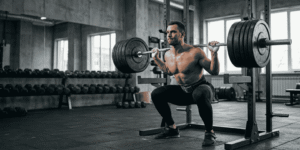
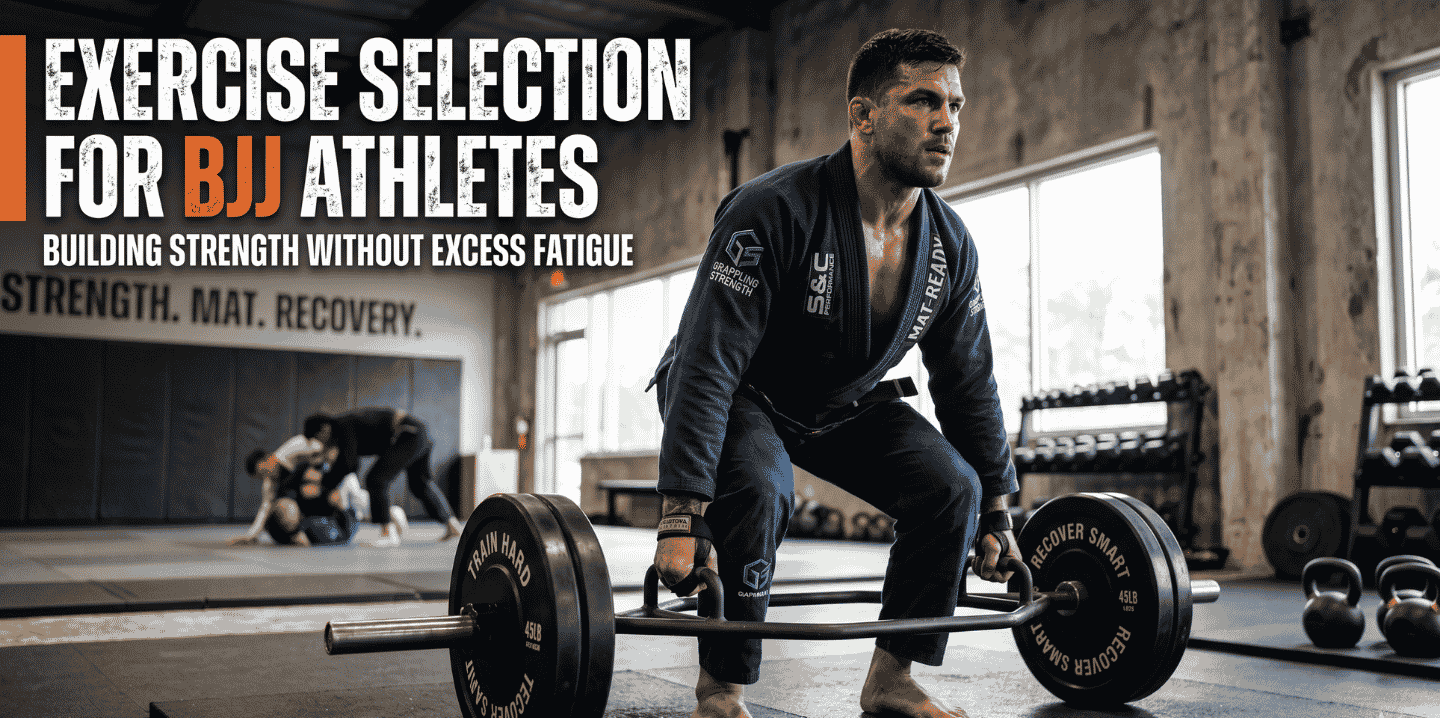
Tier 1: Primary Strength. These are the heavy, compound movements—such as the Trap-Bar Deadlift or the Front Squat. These are the foundation of your force production. They require high technical focus and are usually kept in lower rep ranges with conservative set volumes to manage fatigue and preserve force output.
Tier 2: Supplemental Strength. These lifts build the capacity of the tissues supporting the Tier 1 movements. Unilateral work, such as the Bulgarian Split Squat or single-arm dumbbell pressing, belongs here. These lifts are ideal for correcting left-to-right imbalances often exacerbated by sport.
Tier 3: Tissue Health. These are low-fatigue isolation exercises, such as rear-delt work or forearm-friendly rowing variations. These help build local muscular capacity around commonly stressed joints, which is useful for grapplers who rely on framing, pulling, posting, and grip fighting.
How it applies to BJJ, grappling, and hybrid athletes
The grappling environment is unique: it is chaotic, asymmetric, and physically demanding. Your exercise selection must reflect this.
Sport Fatigue: If your training week includes multiple high-intensity sparring sessions, your lifting plan should preserve the most important Tier 1 strength exposures while reducing unnecessary Tier 2 and Tier 3 volume
Grip Fatigue: BJJ athletes have highly fatigued forearms. When your grip is compromised, use lifting straps for your Tier 1 and Tier 2 pulling movements to ensure the primary target (the back musculature) is stimulated without the hands failing first.
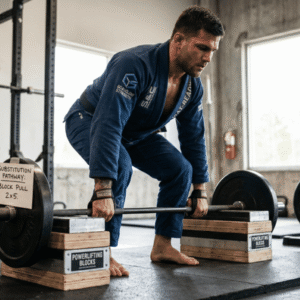
Lower-Back and Hip Stress: Guard playing and defensive framing often lead to lower-back stiffness. When this occurs, avoid heavy conventional barbell deadlifts, which create high axial spinal loading. Switch to elevated trap-bar deadlifts, block pulls, hip thrusts, cable pull-throughs, or controlled back extensions to maintain posterior-chain training with less lower-back demand.
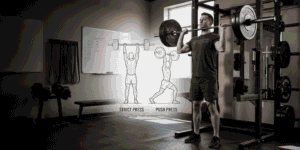
Shoulder Awareness: Grappling involves constant framing and pushing. If shoulder irritation or movement limitation appears during pressing, replace barbell bench pressing with neutral-grip dumbbell pressing, floor presses, landmine presses, or push-ups on handles to create a more tolerable pressing path.
Practical programming rules
The Pattern Preservation Rule
Goal: Ensure the training stimulus remains consistent while swapping the exercise.
How it works: If you cannot execute a specific squat variation due to localized discomfort, replace it with another squat-dominant pattern rather than a hinge or conditioning drill.
Programming response: Keep the movement archetype consistent to ensure your strength gains transfer to the sport.
The Systemic Load Cap
Goal: Balance strength work with high mat volume.
How it works: When sport-specific sparring intensity is high, cap your total working sets for Tier 1 barbell movements.
Programming response: Perform 2 to 3 quality sets rather than 4 to 5. Quality of movement at this stage protects the strength stimulus without dragging excess fatigue into mat sessions.
The Grip-Sparing Rule
Goal: Preserve forearm capacity for BJJ/grappling demands.
How it works: Use lifting straps for heavy rowing or deadlifting variations when hands feel stiff or overused from recent gi or no-gi sessions.
Programming response: The system can adjust your accessory lift prescriptions to prioritize muscle growth over grip endurance.
Example programming templates
Example A: Heavy Strength Block (Low Mat Volume)
Training focus: Primary force production and absolute strength.
Main work: Trap-Bar Deadlift 3×4 (RIR 2); Overhead Press 3×4 (RIR 2).
Stress level: High.
Programming response: The training framework prioritizes force output; heavier loading is appropriate when mat volume is low and readiness is strong.
Coaching note: Maintain clean spinal alignment throughout the deadlift.
Example B: Competition Prep (High Mat Volume)
Training focus: Maintenance and structural health.
Main work: Front Squat 2×5 (RIR 3); Neutral-Grip DB Row 3×8 (RIR 2).
Stress level: Moderate.
Programming response: The coaching framework reduces Tier 1 set volume to clear systemic fatigue.
Coaching note: Use lifting straps for the rows to spare your grip for the mat.
Common mistakes
Ignoring Technical Quality: Attempting to force a Tier 1 lift when movement quality is degrading due to sport fatigue.
Excessive Variety: Constantly changing lifts instead of mastering a few movements over a 12-week block.
Failing to Use the Substitution Pathway: Grinding through a movement that causes joint irritation rather than using an exercise substitution guide to find a more tolerable variation.
Neglecting Tier 3 Health Work: Seeing isolation exercises as optional when, for a grappler, they can help build local capacity in the shoulders, elbows, upper back, and forearms.
Coach or clinician review triggers
To support conservative training decisions, recommend a coach or clinician review if:
Sharp, Radiating, or Neurological Symptoms: The athlete reports numbness, tingling, or shooting pain during or after movement.
Joint Locking or Giving Way: Any sensation that the joint is unstable or structurally inhibited during the movement.
Persistent Symptoms: Localized discomfort that remains present outside of the training session or prevents standard daily activities.
Major Asymmetry: A significant left-to-right imbalance in force or range of motion that does not resolve with a proper warm-up.
How this applies to adaptive programming
Exercise selection must be responsive to the athlete’s real-time input. If RIR targets are missed or the athlete logs excessive soreness, the training plan should hold the load steady, reduce volume, or trigger a substitution pathway. If primary lifts are technically clean but stalled, the training framework can guide whether the next block should bias hypertrophy for the prime movers. If sport fatigue is high, the plan should preserve intensity, reduce volume, and avoid soreness-heavy accessory work to ensure the athlete can return to the mat effectively.
Frequently Asked Questions
Q: Can I use exercise substitutions if I don’t have access to a full gym?
A: Yes. The coaching framework focuses on movement archetypes. Whether you are using a barbell, dumbbells, or a suspension trainer, the key is matching the movement pattern and the relative mechanical tension required to build strength.
Q: How do I know if an exercise substitution is “good enough”?
A: A good substitute preserves the main training stimulus. If you replace a barbell squat with a variation that requires the same pattern and a similar relative intensity while removing the localized discomfort, it is a successful substitution.
Q: Is it better to lift lighter or change the exercise?
A: If a movement causes localized joint irritation, it is often better to change the exercise to a more tolerable alternative rather than simply lowering the load of the painful movement. A proper substitution allows you to train hard safely.
Q: How should I structure my Tier 3 work if my joints feel tired?
A: Prioritize controlled, low-systemic-fatigue accessory work that trains the surrounding muscles without creating additional soreness or joint irritation..
Building strength is a long-term project that requires the right balance between mechanical tension and systemic recovery. Our coaching framework helps you select the right movement patterns to match your sport demands while keeping your joints resilient. Contact our coaching team today to build a program that supports both strength expression and long-term athletic development.