Core training that lives in a yoga mat at the end of the session usually does not transfer. The trunk in grappling has to brace, resist rotation, control extension under bridges, and hold position while limbs work. Training it for those qualities is different from training it for visible abs.
For grappling and hybrid athletes, core training should emphasize anti-rotation, anti-extension, anti-lateral flexion, and braced compound lifting. Two to three short core exposures per week, with two to four working sets each, covers most needs. Heavy compound lifts trained with intentional bracing carry much of the core stimulus.
What Core Training Actually Means
The trunk includes the rectus abdominis, obliques, transverse abdominis, quadratus lumborum, erectors, and diaphragm. These tissues work together to stabilize the spine, transmit force between upper and lower body, and resist movement.
Most trunk function in sport is anti-movement. The trunk resists rotation, extension, or flexion under load rather than producing movement. Programming should mirror this.
A heavy squat or pull trained with proper bracing is itself a core exercise. Dedicated trunk work supplements that base by covering positions and qualities the compound lifts do not directly load.
Why It Matters for Advanced Athletes
For grapplers, trunk stability under load determines how well force transfers between hips and shoulders. A weak trunk loses force in the transfer and creates compensation patterns.
Anti-rotation strength specifically transfers to passing pressure, takedown defense, and maintaining frames against an opponent’s rotational force.
For advanced lifters, trunk training is the difference between a heavy lift that grooves correctly and one that breaks down at the midline.
How It Applies to Barbell Strength Training
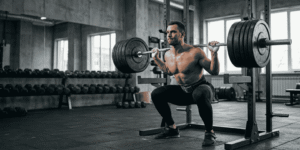
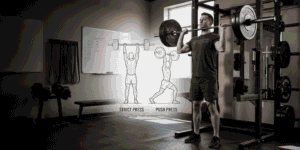
The trunk is trained heavily during properly executed compound lifts. A back squat, front squat, deadlift, and overhead press all demand trunk bracing under load.
Dedicated trunk work then targets the qualities the compound lifts under-load:
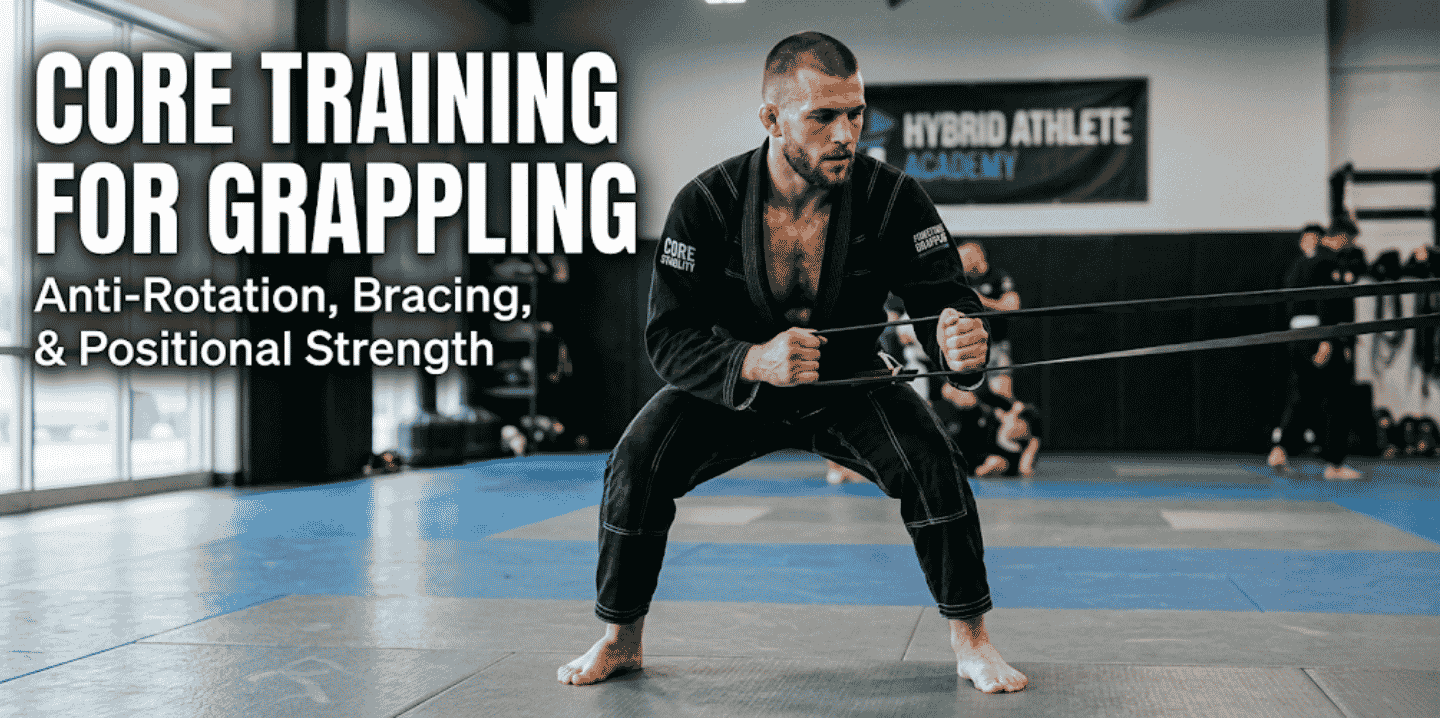
Anti-rotation: Pallof press, half-kneeling cable chop and lift, suitcase carry.
Anti-extension: Hollow body holds, ab wheel rollouts, dead bug variants.
Anti-lateral flexion: Side plank variants, single-arm carries, single-arm overhead carries.
Bracing under load: Loaded carries, paused squat variants, overhead carries.
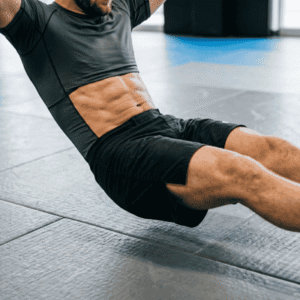
Heavy direct flexion (sit-ups, weighted crunches) has a place but is usually the lowest-leverage choice for grapplers and is the easiest place to overdose if not careful.
How It Applies to BJJ, Grappling, and Hybrid Athletes
For grapplers, anti-rotation work is the highest-transfer trunk training.
The Pallof press in half-kneeling, standing, and split-stance variations covers the pattern at multiple positions. Adding a slow tempo and breath-controlled bracing makes the exercise harder without adding load.
Loaded carries (suitcase carries especially) train both anti-rotation and anti-lateral flexion simultaneously. They are highly transferable and have a manageable recovery cost.
Bridge variants and bridging-into-press work build positional trunk strength that maps directly to BJJ guard retention and escapes.
Heavy direct flexion work (sit-ups, weighted crunches) should be conservative. Many grapplers already accumulate plenty of flexion volume from mat work itself.
Practical Programming Rules
Use Heavy Compound Lifts as the Core Foundation
A heavy squat or pull, executed with proper bracing, is the core’s primary weekly stimulus. Dedicated work supplements this.
Train All Four Anti-Movement Patterns Across the Week
Anti-rotation, anti-extension, anti-lateral flexion, and bracing-under-load each deserve coverage. Skipping one usually shows up as a gap in sport-specific stability.
Keep Dedicated Trunk Sessions Short
Two to three exposures per week, two to four working sets each, is a workable default. Adding more usually trades adaptation for fatigue.
Use Tempo and Position Over Heavy Load
Trunk work often produces more useful adaptation through tempo control, position, and breath than through heavy external load.
Cap Direct Flexion Volume
Sit-ups and weighted crunches have a place but should be a small portion of total trunk work, especially for grapplers who already accumulate mat-related flexion.
Example Programming Templates
Example 1: Trunk Session Within a Lifting Day
Training focus: Anti-rotation and anti-extension after a heavy lower-body day.
Main work: After Tier 1 squat and Tier 2 lunge: Pallof press from half-kneeling, 3 working sets of 8 per side at RIR 2. Ab wheel rollout, 3 working sets of 6 to 8 at RIR 2. Suitcase carry, 3 sets of 30 to 40 seconds per side.
Stress level: Moderate.
Programming response: Two anti-movement patterns plus a loaded carry, sequenced after the main lifts. Total trunk dose is short and targeted.
Coaching note: The compound lifts already braced under load. Dedicated work covers what they did not.
Example 2: Dedicated Short Trunk Session, BJJ Athlete
Training focus: Trunk maintenance during a heavy mat week.
Main work: Pallof press, 3 working sets of 8 per side at RIR 1 to 2. Side plank with reach, 3 working sets of 6 reaches per side at RIR 2. Dead bug with slow tempo, 3 working sets of 6 per side.
Stress level: High. Three hard sparring sessions for the week.
Programming response: Short session, low recovery cost. All anti-movement work. No heavy direct flexion.
Coaching note: The session is 15 to 20 minutes. It maintains trunk quality without competing with mat recovery.
Common Mistakes
Treating “core day” as 45 minutes of low-leverage flexion work. Most of that volume is not driving sport transfer.
Skipping anti-rotation work because it does not produce a pump. The transfer to grappling is high.
Stacking heavy trunk work on top of heavy bracing-intensive lifts in the same session without recovery planning. The trunk fatigues like any other tissue.
Ignoring breath. Trunk training without controlled breathing and bracing reduces the quality of the exposure substantially.
Using only static positions (planks, hollow holds) and missing dynamic anti-movement work.
Coach or Clinician Review Triggers
Sharp pain, radiating symptoms, numbness, or tingling in the spine, hips, or down the leg during trunk work.
Persistent lower-back discomfort that worsens with planned trunk exposures.
Locking or giving way in the spine or hip during loaded carries or hinging.
Major asymmetry in trunk strength between sides that persists or widens across a block.
In each case, remove the implicated exercise and route to a coach or qualified clinician before reintroducing.
How This Applies to Adaptive Programming
If sport stress is high, then keep one short trunk session per week emphasizing anti-rotation and bracing, and remove direct flexion.
If lower-back stiffness is present, then prefer anti-extension and anti-lateral flexion work and reduce loaded flexion.
If a competition is within four weeks, then maintain trunk exposure with two short sessions per week and remove novel exercises.
If a clear asymmetry appears in trunk strength, then start each set on the subordinate side and adjust load to clean position on that side.
If a recurrent rib or hip flexor irritation appears, then audit total flexion volume across mat and gym work and reduce as needed.
Frequently Asked Questions
Do I need to train core if I squat and deadlift heavy? Heavy compounds carry much of the trunk stimulus, but they do not directly cover anti-rotation and many anti-lateral flexion patterns. Dedicated work fills the gap.
How often should I train core? Two to three short exposures per week, with most of the volume integrated into other lifting days, is a workable default.
Are sit-ups bad? Not inherently. They are one tool. They become a problem only when they dominate the trunk program at the expense of more transferable work.
What is the best single core exercise for BJJ? No single exercise covers all the qualities. A Pallof press, an ab wheel rollout, and a suitcase carry together cover most of the high-transfer patterns.
If core work has been crunches and planks, replace half the volume with anti-rotation and loaded carries for one block. The change in transfer to mat work usually justifies the rest of the rebuild.