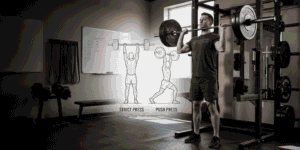
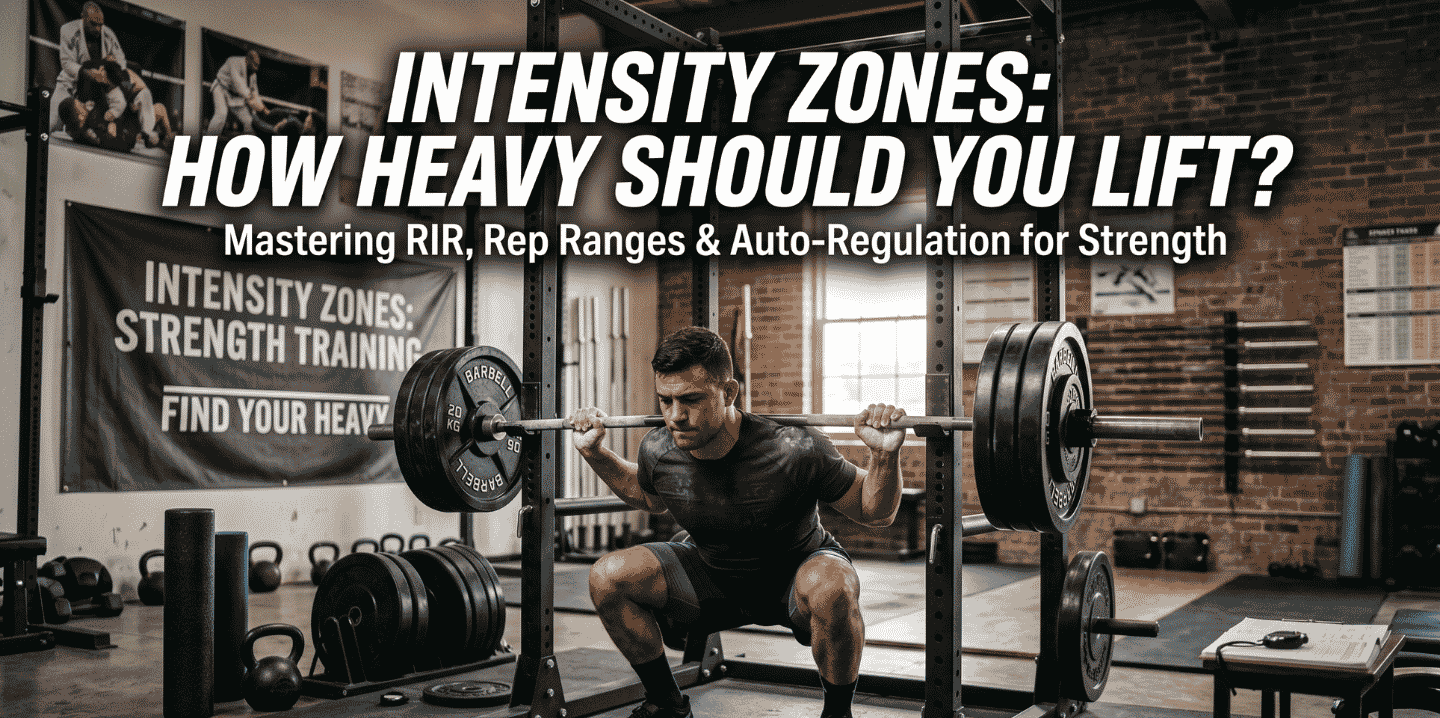
“Lift heavy” is incomplete advice. The question is heavy for what, and heavy compared to what. The right intensity is the one that develops the target strength quality while still recovering in time for the next session and the next mat round.
Across an advanced strength program, intensity is best anchored to RIR and rep ranges rather than fixed percentages. Strength-biased work usually sits around RIR 1 to 3 in the 1 to 5 rep range, with true RIR 0 reserved for planned tests or low-sport-stress phases. Hypertrophy-biased work usually sits at RIR 1 to 3 in the 6 to 12 rep range, with lower-risk isolation work occasionally moving closer to failure. Sport stress shifts the upper boundary of intensity downward across a week or block.
What Intensity Actually Means
Intensity in strength training refers to how heavy a load is relative to the athlete’s current capacity in that lift. It is not the same as effort. A set of 5 at RIR 0 is high intensity and high effort. A set of 10 at RIR 0 is moderate intensity and high effort.
The reason this distinction matters: two sets at the same RIR can train different qualities depending on the load and rep range. Strength qualities respond best to heavier loads moved with high intent and enough proximity to the athlete’s current limit, without requiring frequent failure. Hypertrophy responds across a wider range of loads as long as the proximity to failure is sufficient.
Why It Matters for Advanced Athletes
For advanced athletes, the gap between productive intensity and excessive fatigue is narrower. Misjudging by even one or two RIR on a heavy lift can mean a missed session two days later.
For combat-sport athletes, the same misjudgment can also bleed into mat performance. A poorly chosen heavy day costs more than just the lift; it costs the sparring session that follows.
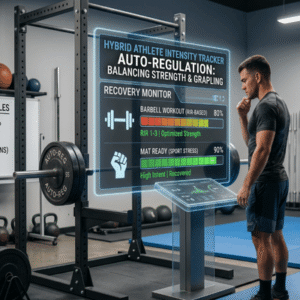
Anchoring intensity to RIR rather than a calculated percentage makes the prescription self-correcting across days of variable readiness.
How It Applies to Barbell Strength Training
Strength-biased work usually belongs in the 1 to 5 rep range at RIR 1 to 3. For Tier 1 lifts in a strength block, top sets of 1 to 3 reps at RIR 1, backed off to sets of 3 to 5 reps at RIR 2, are a clean default. True RIR 0 work is a planned exposure, not a weekly default.
Hypertrophy-biased work belongs in the 6 to 12 rep range at RIR 1 to 3. For Tier 2 and Tier 3 lifts in a hypertrophy block, sets of 8 to 10 at RIR 2 are a clean default.
Power-biased work belongs at lower reps with higher RIR. Singles or doubles at RIR 3 or higher, moved with intent, develop rate of force production without the recovery cost of heavy near-failure work.
Combining all three across a week is normal. The proportions shift by phase.
How It Applies to BJJ, Grappling, and Hybrid Athletes
During heavy sport blocks, the top end of intensity should be capped. RIR 0 work belongs in low-sport-stress phases. RIR 1 to 2 is the practical upper bound during competition prep.
Power-biased work tolerates sport stress well because it is far from failure. Single jumps, medicine ball throws, low-rep clean pulls, or fast trap-bar deadlifts at RIR 3 or higher can be programmed even in heavy mat weeks without major recovery cost.
For hybrid athletes, intensity selection has to coordinate with conditioning intensity. A hard interval session in the same 24-hour window as a heavy top set rarely lands well at advanced training ages.
Practical Programming Rules
Anchor Top Sets to RIR, Not Percentage
A prescription like “work up to a top set of 3 at RIR 1” handles variable readiness more reliably than a fixed percentage of an old max.
Cap the Top of Intensity During Heavy Sport Weeks
When sport stress is high, RIR 0 work belongs out of the program. RIR 1 to 2 keeps the strength exposure intact without pushing fatigue into the next sport session.
Pair Top Sets with Conservative Back-Offs
After a top set near the upper end of intensity, back-off sets at the same load minus 8 to 12 percent at RIR 2 give the athlete more quality reps without compounding fatigue.
Move Intent Up Before Moving Load Up
For power-biased work, the variable to progress is bar speed, not load. Holding load steady while improving speed is a strength gain.
Reassess Intensity Anchors When Strength Shifts
If the athlete’s working RIR 1 single has changed over a block, the back-off load and accessory weights should change with it.
Example Programming Templates
Example 1: Strength Block, Tier 1 Squat
Training focus: Develop low-bar squat at high intensity.
Main work: Build to a top single at RIR 1. Three back-off sets of 3 at top single minus 10 percent, RIR 2.
Stress level: Moderate. Two mat sessions earlier in the week.
Programming response: Take the top single at the upper end of the workable range. Back-offs at the prescribed load and RIR. No additional heavy work that day.
Coaching note: The top single drives the strength quality. Back-offs add quality reps without adding RIR 0 exposure.
Example 2: Power-Biased Day, Pre-Competition
Training focus: Maintain rate of force production at low recovery cost.
Main work: Trap-bar deadlift, 5 sets of 2 at RIR 3 to 4, moved fast. Medicine ball rotational throw, 4 sets of 4 per side, full effort.
Stress level: High. Competition two weeks out.
Programming response: Load is meaningful but well below max. Intent is to move it fast. Set count is short. Total session under 45 minutes.
Coaching note: Power-biased work fits cleanly during taper because it is far from failure and low in total volume.
Common Mistakes
Anchoring training to an old one-rep max calculated months ago. Readiness and strength shift faster than that, and percentages drift out of accuracy.
Pushing RIR 0 work in the same week as a hard competition simulation or peak sparring day. Even when the lift goes well, the recovery cost usually shows up two days later.
Treating “feels heavy” as a substitute for measured RIR. Heavy is a sensation. RIR is an estimate of reps still in the tank. Logging both is more useful than either alone.
Programming power work as if it were strength work. Adding more sets, more reps, or pushing closer to failure turns a power session into a low-quality strength session.
Coach or Clinician Review Triggers
Sharp pain, radiating symptoms, numbness, tingling, locking, or giving way during heavy work or near-failure sets.
Loss of bar speed at submaximal loads that does not return with rest.
Persistent inability to hit prescribed RIR at planned loads across multiple sessions.
Major movement asymmetry that appears or worsens with high-intensity work.
In each case, reduce intensity to RIR 3 or higher for one to two weeks and route to a coach or qualified clinician before returning to higher intensity.
How This Applies to Adaptive Programming
If readiness is high, then take top sets at the upper end of the workable load range and hold RIR as planned.
If sport stress is high, then cap top sets at RIR 1 to 2 and move RIR 0 work to a later phase.
If bar speed is clearly slow at warm-ups, then drop the planned top set by one RIR target and reduce back-off load.
If a competition is within two to four weeks, then prefer power-biased intensity over strength-biased intensity for at least one weekly lift session.
If high-intensity work consistently disrupts recovery, then reduce frequency of RIR 0 to 1 work before reducing other variables.
Frequently Asked Questions
Should I use percentages or RIR? RIR adapts to readiness; percentages do not. For advanced athletes who also train a sport, RIR is usually the more reliable anchor.
How often should I take a true RIR 0 set? Rarely. For most advanced lifters, a true near-failure set on a main lift belongs once every two to three weeks, often as a planned overreach within a block.
Is heavy training necessary for hypertrophy? Hypertrophy develops across a wide load range when proximity to failure is sufficient. Heavy training is one tool for it, not the only tool.
Can I train at high intensity year-round? No. The top of intensity is a finite resource. Cycling it across phases preserves the athlete’s ability to express it when it matters.
If intensity has been set by old numbers or by feel alone, anchor the next block’s main lifts to specific RIR targets and log actual RIR. Two weeks of honest data usually rewrites the prescription.