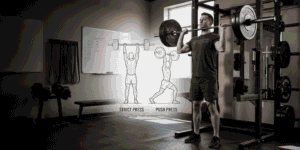

Movement screening provides an objective framework to assess baseline mobility and control before adding heavy loads. When an exercise causes pain or structural compensation, you should consider routing the athlete to a joint-friendly, lower-stress variation. This non-diagnostic exercise selection approach keeps your training consistent without compounding localized joint irritation.
What movement screening actually means
In an elite training system, movement screening functions as a non-diagnostic quality filter before programming external resistance. It does not attempt to diagnose specific medical pathologies, isolate torn ligaments, or prescribe physical therapy protocols. Instead, it helps categorize movement patterns as clean, compensated, restricted, or painful.
For advanced trainees and combat sport athletes, movement screening establishes safe training constraints. By checking how joints interact under bodyweight or light resistance, coaches can identify movement compensation patterns before they impact session quality. The goal is to establish baseline readiness, ensuring that external loads are layered only onto patterns where clean movement control has been demonstrated.

Why movement screening matters on the mat and in the gym
Grapplers, fighters, and advanced lifters frequently deal with asymmetrical wear, localized tightness, and minor joint irritation due to the chaotic nature of sport training. If heavy weight is forced onto a restricted or painful movement pattern, the athlete can experience quick technical breakdown and movement alterations.
For example, forcing a deep barbell back squat when an athlete lacks functional hip or ankle mobility often causes the lower back to round or the knees to cave. Over time, these subtle movement alterations can slow down recovery, cause muscle soreness, and compromise overall strength output. Screening acts as a protective entry gate, helping ensure that training remains highly productive without aggravating sensitive joints.
Core movement patterns and assessment gates
To determine readiness, athletes should pass through basic movement gates for each primary pattern family. The sections below outline observable tracking markers and the corresponding programming responses.
Lower Body Squatting
Observable quality gate: Keeps heels flat; maintains upright torso; hips drop below parallel smoothly.
Common alteration / sign of fatigue: Heels lift; torso leans forward excessively; lower back rounds at the bottom.
Programming response: Switch to front squats or safety squat bar box squats to encourage an upright posture.
Hip Hinging / Pulling
Observable quality gate: Maintains flat spine; hips drive back; shoulders stay packed.
Common alteration / sign of fatigue: Lumbar spine rounds; knees push forward early; bar drifts away from shins.
Programming response: Elevate the pulling surface using blocks or switch to a neutral-grip hex bar deadlift.
Upper Body Pressing
Observable quality gate: Arms lock out overhead without back arching; smooth horizontal push.
Common alteration / sign of fatigue: Shoulder blades shrug upward; lower back arches; elbows flare out aggressively.
Programming response: Limit overhead volume. Swap to neutral-grip dumbbell floor presses or landmine variations.
Upper Body Pulling
Observable quality gate: Full scapular retraction; chest meets bar; shoulders stay down.
Common alteration / sign of fatigue: Shoulders roll forward at the top; head juts forward; grip fails prematurely.
Programming response: Introduce neutral-grip pull-ups or consider using lifting straps to manage forearm fatigue.
Rotational / Core Control
Observable quality gate: Torso rotates smoothly while pelvis stays square; stable brace.
Common alteration / sign of fatigue: Lumbar spine hyperextends; hips twist excessively; loss of abdominal tension.
Programming response: Incorporate static core variations like extended hollow body positions or loaded carries.
The pain gate and training modification protocols
The primary safety rule of an elite screening system is the Pain Gate Protocol. If an exercise triggers pain or problematic structural feedback, the movement pattern should be modified or stopped based on the specific classification of the symptoms.
Sharp, Radiating, or Unstable Symptoms
If a training exposure triggers sharp pain, radiating symptoms, joint locking, unprompted joint giving way, or neurological pathways (numbness and tingling), you must immediately stop the affected movement pattern. Do not allow submaximal testing or load reductions to bypass this gate. The training framework must pause loading for that specific pattern family and recommend a coach or clinician review before any progression occurs.
Mild, Dull Discomfort
If the symptom is described as a mild, dull ache or general joint awareness without locking, sharp sensations, or radiating lines, the workload can be routed through supervised modification. Test adjustments to the hand or foot position first. If a small grip or stance adjustment makes the path more tolerable within the tested range, the athlete may proceed with caution. If discomfort continues, change the loading vector using alternative exercise selection, or shorten the range of motion using floor blocks or box targets to train within a reliable, more tolerable boundary.
How this connects to the training framework
The training framework uses this movement screening framework as its primary safety routing engine. When an athlete inputs a training constraint or flags joint irritation during their daily check-in, the system bypasses standard progression rules.
Instead of generating universal barbell prescriptions, the engine analyzes the affected anatomical node and scans the exercise library for a matching functional alternative. This automated routing ensures that the overall training split remains consistent and targeted, while individual exercise selections dynamically adapt to the athlete’s real-time readiness.
Volume and intensity rules for modified patterns
When an athlete is routed to a lower-stress exercise alternative due to movement limitations or joint awareness, apply these conservative boundaries:
- Sets: Keep the volume tight, using a starting range of 2 to 3 working sets per modified exercise. Minimizing volume reduces cumulative fatigue on recovering structures.
- Intensity: Maintain a conservative intensity zone. For many athletes, use a load that lands around RIR 3 to 4 rather than relying on a true percentage, because most substitute lifts do not have a reliable tested 1RM.
- Reps in Reserve (RIR): Enforce strict technical consistency by maintaining an initial target of 2 to 4 Reps in Reserve (RIR 2-4). Working sets should stay well away from absolute muscular failure.
- Frequency: Limit loaded exposures for the sensitive pattern family to 1 to 2 sessions per week, allowing a fallback to low-stress active mobility work if the athlete reports lingering stiffness.
BJJ and grappling-specific screening considerations
Combat sports present specific structural stressors that can easily skew weight-room performance. Coaches should analyze mat-specific fatigue using these non-diagnostic tracking categories:
- Lower-Back Stiffness from Guard Playing: Deep open-guard work and defensive framing place a high demand on the lumbar and pelvic stabilizers. If an athlete demonstrates restricted hip flexion or flags lower-back discomfort during screening, swap conventional deadlifts for elevated block pulls or kettlebell hinges to manage lower-back loading.
- Shoulder Irritation from Framing: Continuous posting and framing against an opponent’s weight can cause minor shoulder irritation and limit internal rotation. When screening upper-body pressing, flat barbell benching should be avoided if shoulder blades cannot retract smoothly. Switch to landmine presses or push-ups on handles to allow a more tolerable pressing path.
- Knee Sensitivity from Takedowns or Submissions: Direct impact from shots or torsional stress from twisting guards can lead to temporary knee sensitivity. If an athlete displays knee caving or asymmetry during a bodyweight squat screen, drop bilateral barbell squat depth. Use vertical-shin variations like dumbbell box squats or single-leg step-ups to maintain leg strength output with less joint stress.
Practical screening workout examples
Example A: Non-Diagnostic Modification for Shoulder Irritation
- Screening Trigger: Trainee flags sharp discomfort at the bottom of a standard barbell bench press.
- Action: Halt the barbell press. Test push-ups on handles; if non-sharp and comfortable, use as a baseline.
- Modified Setup: Neutral-Grip Dumbbell Floor Press: 3 sets x 8 reps (Enforce RIR 3; stop elbows exactly at floor contact). Alternate with Push-ups on Handles: 2 sets x 10 reps (Slow, controlled eccentric phase; maintain packed shoulder blades).
Example B: Non-Diagnostic Modification for Lower-Back Sensitivity
- Screening Trigger: Trainee demonstrates visible lumbar rounding during warm-up sets of conventional deadlifts.
- Action: Stop the floor pull. Elevate the load center to check if spinal alignment stabilizes.
- Modified Setup: Kettlebell Deadlift from 6-Inch Blocks: 3 sets x 8 reps (Focus on driving hips back; stop sets if posture shifts). Alternate with Extended Hollow Body Plank: 3 sets x 30 seconds (Enforce active core bracing; keep lower back flat against the floor).
Common mistakes
- Forcing Light Weights Through Sharp Pain: Believing that dropping the barbell weight makes a painful movement pattern acceptable to train, which can prolong joint irritation.
- Treating Weight Room Lifts as Mandatory: Assuming that an athlete must perform specific competitive powerlifts to get strong, rather than focusing on the broader functional pattern family.
- Over-Diagnosing the Trainee: Attempting to name exact orthopedic conditions or perform manual muscle tests instead of routing the athlete to simple, more tolerable exercise alternatives.
- Ignoring Form Alterations Under Fatigue: Allowing an athlete to continue working sets when their posture visibly shifts or their bar speed drops significantly due to exhaustion.
Coach or clinician review triggers
To maintain conservative training decisions, recommend an expert coach or clinician review if your data flags any of the following indicators:
- Radiating Symptoms: The athlete reports numbness, tingling, or shooting nerve pathways during or after loading any pattern.
- Acute Joint Instability: A joint gives way, clicks painfully, or structurally locks during a movement screen or working set.
- Persistent Pain: Localized joint discomfort or soreness persists continuously outside of training hours during standard daily tasks.
- Unresolved Modifications: The athlete cannot find a single variation within a movement pattern family that can be executed more tolerable within the tested range.
Source-domain notes
- Gray Cook Movement: Provided the core structural philosophy regarding functional assessment gates, the concept that clean movement control should generally precede heavy loading, and non-diagnostic corrective routing.
- Advanced Strength and Conditioning: Influenced the selection of field-ready monitoring metrics, readiness tracking scales, and real-time fatigue observation strategies.
How this applies to adaptive programming
Our framework converts daily movement quality reports into systemic adjustments. If you indicate sharp pinching or structural restrictions during check-in, the system switches the pattern status to restricted. This path pauses standard progression and redirects the next training exposure toward lower-stress alternatives that better match your current movement quality.
Frequently Asked Questions
Q: Is movement screening meant to treat or diagnose my training injuries?
A: No. This screening system is strictly non-diagnostic. Its purpose is to spot technical compensations, joint stiffness, or loading limits, routing you to safer, more tolerable movement paths without identifying underlying medical pathologies.
Q: What should I do if an exercise causes a mild, dull ache instead of sharp pain?
A: Mild, dull awareness can often be managed through minor mechanical adjustments. Try modifying your grip angle, widening your stance, or shifting tools. If the path becomes more tolerable within the tested range, you can continue with caution.
Q: How does the system handle a lift that fails a movement quality gate?
A: The program builder bypasses baseline linear calculations for that movement pattern family. The program should redirect that movement pattern toward variations that reduce range of motion, change the loading position, or lower joint stress while preserving the training goal..
Q: When does a movement constraint require a complete break from training?
A: If a pattern family triggers radiating symptoms (numbness, shooting lines) or acute joint instability (locking, buckling), you should pause loading and seek qualified review before returning to external loads.
Protect your joints, maximize your output. Do not let minor stiffness turn into a chronic training restriction. Let our screening parameters guide your movement pathways to construct a functional framework matching your structural readiness. Reach out today to unlock an injury-conscious plan designed for your longevity.
Train around limitations without guessing. Use movement screening rules to choose smarter variations, protect your training consistency, and know when to ask for qualified review.